Addiction is a complex and multifaceted condition that impacts individuals and their families on multiple levels. While the stereotypical image of addiction might involve a person misusing substances like alcohol or drugs, addictive behaviours extend beyond substances and include activities such as gambling, internet use, and even food consumption. Understanding addiction requires a comprehensive approach that considers biological, psychological, and social factors—known collectively as the biopsychosocial model (Masiak, 2013). This model provides a holistic framework for exploring the causes, progression, and treatment of addiction.
Biological Factors in Addiction
Genetic Predisposition
Research consistently shows that genetics play a significant role in the development of addictive behaviors (Deak & Johnson, 2021). Individuals with a family history of addiction are at higher risk of developing similar problems. Studies suggest that genetic factors can account for a substantial portion of a person’s vulnerability to addiction (Koob et al., 2023). These inherited traits can influence how the brain responds to substances or addictive activities, making some individuals more susceptible.
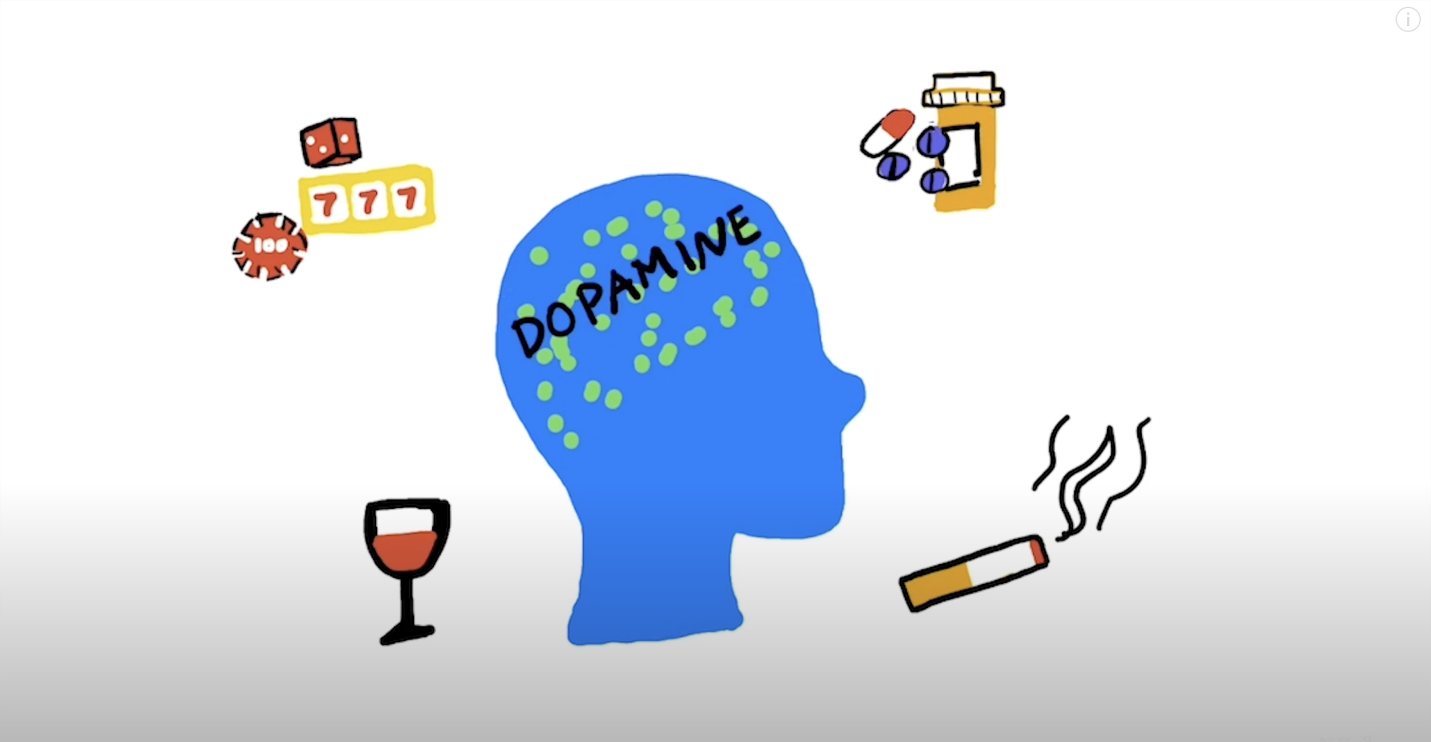
For example, variations in genes related to the dopamine system—such as the dopamine receptor D2 gene (DRD2)—can affect the brain’s reward system (Deak & Johnson, 2021). Dopamine, often referred to as the "feel-good" neurotransmitter, plays a central role in reinforcing behaviors. When dopamine release is triggered by a substance or behavior, it creates feelings of pleasure and reward, reinforcing the likelihood of repeating the behavior.
Neurobiology of Addiction
Addiction is often described as a brain disease because it alters the brain's structure and function (Koob et al., 2023). The repeated use of addictive substances or engagement in addictive behaviors hijacks the brain’s reward circuitry, primarily in regions such as the nucleus accumbens and the prefrontal cortex. Over time, the brain becomes dependent on the substance or behavior to maintain normal functioning, leading to tolerance (needing more of the substance to achieve the same effect) and withdrawal symptoms when the substance is removed.
Additionally, chronic use can impair the prefrontal cortex, the area responsible for decision-making, impulse control, and self-regulation (Koob et al., 2023). This impairment makes it difficult for individuals to stop using substances or engaging in addictive behaviors, even when they recognize the negative consequences.
Psychological Factors in Addiction
Trauma and Emotional Regulation
Many individuals struggling with addiction have a history of trauma or adverse childhood experiences (ACEs), such as physical or emotional abuse, neglect, or the loss of a loved one (Hays-Grudo et al., 2021). These experiences can create deep psychological wounds that make it difficult for individuals to manage stress and regulate their emotions.
Substances and addictive behaviors often serve as maladaptive coping mechanisms, providing temporary relief from emotional pain, anxiety, or depression (Mack, 2023). For example, alcohol may be used to numb feelings of sadness, while compulsive internet use may serve as a distraction from feelings of loneliness or inadequacy.
Cognitive Distortions and Beliefs
Cognitive distortions—irrational or exaggerated thought patterns—also contribute to the development and maintenance of addiction (Rezaeisharif et al., 2021). Shapiro (2021) provide some common distortions:
These distorted beliefs can perpetuate addictive behaviors by justifying continued use or creating a sense of helplessness in the face of attempts to quit (Rezaeisharif et al., 2021).
Social Factors in Addiction
Environmental and Peer Influences
The environment in which a person lives plays a crucial role in shaping their risk for addiction. Factors such as socioeconomic status, availability of substances, and exposure to peer groups that normalize substance use can increase vulnerability (Onyenwe & Odilibe, 2024). Adolescents and young adults, in particular, are highly susceptible to peer influence. Being surrounded by friends or family members who engage in substance use can increase the likelihood of initiating and maintaining addictive behaviors.
Family Dynamics and Support Systems
Family relationships can either contribute to or protect against addiction. Dysfunctional family environments characterized by conflict, neglect, or abuse can increase the risk of addiction (Onyenwe & Odilbe, 2024). On the other hand, supportive relationships and strong social networks can act as protective factors.
Families also play a critical role in the recovery process (Onyenwe & Odilbe, 2024). Family-based therapy, such as multidimensional family therapy (MDFT), has been shown to be effective in treating adolescent substance use disorders by addressing communication patterns, family roles, and relational dynamics that contribute to addiction (Liddle et al., 2023).
The Biopsychosocial Approach to Treatment
Effective addiction treatment recognizes the need to address biological, psychological, and social factors simultaneously. Some common interventions include:
Conclusion
Addiction is not a one-dimensional problem but a complex interplay of biological, psychological, and social factors. The biopsychosocial model provides a holistic framework for understanding and addressing addiction, emphasizing the need for comprehensive and individualized treatment. By addressing the underlying causes of addiction and fostering resilience in all areas of life, individuals can achieve lasting recovery and rebuild a life of health, purpose, and connection.
References
Onyenwe, C. A., & Odilibe, I. P. (2024). Socioeconomic determinants of mental health and substance use: A review and Conceptual Solutions for Public Health policy. International Journal of Applied Research in Social Sciences, 6(3), 409–420. https://doi.org/10.51594/ijarss.v6i3.966
Deak, J. D., & Johnson, E. C. (2021). Genetics of Substance Use Disorders: A Review. Psychological Medicine, 51(13), 2189–2200. https://doi.org/10.1017/s0033291721000969
Hafford-Letchfield, T., McQuarrie, T., Clancy, C., Thom, B., & Jain, B. (2020). Community based interventions for problematic substance use in later life: A systematic review of evaluated studies and their outcomes. International Journal of Environmental Research and Public Health, 17(21), 7994. https://doi.org/10.3390/ijerph17217994
Hays-Grudo, J., Morris, A. S., Ratliff, E. L., & Croff, J. M. (2021). Adverse childhood experiences and addiction. Emerging Issues in Family and Individual Resilience, 91–108. https://doi.org/10.1007/978-3-030-56958-7_5
Koob, G. F., Kandel, D. B., Baler, R. D., & Volkow, N. D. (2023). Neurobiology of addiction. Tasman’s Psychiatry, 1–51. https://doi.org/10.1007/978-3-030-42825-9_29-1
Liddle, H. A., Dakof, G., Rowe, C., Mohamed, A. B., Henderson, C., Foulkrod, T., Lucas, M., & DiFrancesco, M. (2023). Multidimensional family therapy for justice-involved young adults with substance use disorders. The Journal of Behavioral Health Services & Research, 51(2), 250–263. https://doi.org/10.1007/s11414-023-09852-5
Mack, W. (2023). Exploration of Coping Strategies in People With a History of Substance Abuse (Order No. 30691045). Available from ProQuest Dissertations & Theses Global. (2878648248). https://www.proquest.com/dissertations-theses/exploration-coping-strategies-people-with-history/docview/2878648248/se-2
Martínez-Fernández, D. E., Fernández-Quezada, D., Garzón-Partida, A. P., Aguilar-García, I. G., García-Estrada, J., & Luquin, S. (2024). The effect of eye movement desensitization and reprocessing (EMDR) therapy on reducing craving in populations with substance use disorder: A meta-analysis. Brain Sciences, 14(11), 1110. https://doi.org/10.3390/brainsci14111110
Masiak, J. (2013). Biopsychosocial model of addictions and other approaches. Zdrowie Publiczne, 123(4), 321-324. https://doi.org/10.12923/j.0044-2011/123-4/a.12
Rezaeisharif, A., Karimi, A., & Naeim, M. (2021). Effectiveness of the cognitive restructuring approach on irrational beliefs and hopelessness in individuals with a substance abuse disorder: A randomized controlled trial. Addictive Disorders & Their Treatment, 20(4), 326–335. https://doi.org/10.1097/adt.0000000000000264
Rosson, S., de Filippis, R., Croatto, G., Collantoni, E., Pallottino, S., Guinart, D., Brunoni, A. R., Dell’Osso, B., Pigato, G., Hyde, J., Brandt, V., Cortese, S., Fiedorowicz, J. G., Petrides, G., Correll, C. U., & Solmi, M. (2022). Brain stimulation and other biological non-pharmacological interventions in mental disorders: An umbrella review. Neuroscience & Biobehavioral Reviews, 139, 104743. https://doi.org/10.1016/j.neubiorev.2022.104743
Shapiro, L. (2019). Cognitive behavioral therapy: Worksheets: 65+ ready-to-use CBT worksheets to motivate change, practice new behaviors and regulate emotion. PESI.
Torres‐Lockhart, K. E., Lu, T. Y., Weimer, M. B., Stein, M. R., & Cunningham, C. O. (2022). Clinical management of opioid withdrawal. Addiction, 117(9), 2540–2550. https://doi.org/10.1111/add.15818
Written by Grit Psychology in honor of National Grief and Bereavement Day, November 19.
Grief is one of life’s most universal experiences, yet it is profoundly personal. Each person navigates it differently, shaped by their relationships, circumstances, and inner world. National Grief and Bereavement Day reminds us to reflect on the multifaceted nature of grief and the importance of embracing a healing journey that is uniquely ours.
The Many Faces of Grief
Grief is often associated with loss through death, but it can emerge in response to a wide range of experiences, such as the end of a relationship, loss of a job, or significant life transitions. Recognizing the different types of grief can help us understand our own responses and those of others:
The Intersectionality of Grief
Grief intersects with identity, culture, and lived experiences, shaping how it manifests and is processed (Benham & Hoerst, 2024). For example:
Understanding these intersections fosters empathy and ensures that grief support is inclusive and respectful of diversity.
Comorbid Disorders and Grief
Grief doesn’t exist in a vacuum; it can intersect with or trigger mental health challenges, including:
Being aware of these potential outcomes is crucial. If grief seems to spiral into these patterns, seeking professional support is an essential step toward healing.
Honoring Your Grief Journey
There is no “right” way to grieve. The notion of “moving on” can feel dismissive or even impossible for many. Instead, the focus should be on “moving forward” — learning to live alongside grief while finding ways to honor your loss and reclaim joy (Darbonne, 2023).
Growth Through Grief
Grief changes us. While the loss remains a part of our story, it doesn’t have to define us. Post-traumatic growth is the process of finding strength, resilience, and new perspectives in the wake of hardship. This doesn’t mean forgetting; it means integrating the loss into your life in a way that fosters meaning and connection.
National Grief and Bereavement Day is a call to action: to honor our losses, embrace our unique journeys, and support one another in finding healing. In grief, there is no finish line, but there can be growth, love, and hope.
If you’re navigating loss, know that Grit Psychology is here to help you chart your path forward with compassion and care. You don’t have to walk this road alone.
References
Benham, C., & Hoerst, D. (2024). What role do social-ecological factors play in ecological grief?: Insights from a global scoping review. Journal of Environmental Psychology, 93, 102184. https://doi.org/10.1016/j.jenvp.2023.102184
Brown, R. L., LeRoy, A. S., Chen, M. A., Suchting, R., Jaremka, L. M., Liu, J., Heijnen, C., & Fagundes, C. P. (2022). Grief symptoms promote inflammation during acute stress among bereaved spouses. Psychological Science, 33(6), 859–873. https://doi.org/10.1177/09567976211059502
Caparrós, B., & Masferrer, L. (2021). Coping strategies and complicated grief in a substance use disorder sample. Frontiers in Psychology, 11. https://doi.org/10.3389/fpsyg.2020.624065
Castellato, G. (2022). Disenfranchised grief in contemporary society. Summus Editorial.
Curtiss, J. E., Levine, D. S., Ander, I., & Baker, A. W. (2021). Cognitive-behavioral treatments for anxiety and stress-related disorders. Focus, 19(2), 184–189. https://doi.org/10.1176/appi.focus.20200045
Darbonne, A. (2023). Navigating Grief Workbook: Evidence-Based Exercises to Move Through Grief and Heal. Simon and Schuster.
Galanos, A. N., & Labriola, M. K. (2022). How we manage grief. Clinc Adv Hematol Oncol, 20(9), 561-563. https://www.hematologyandoncology.net/archives/september-2022/how-we-manage-grief/
Jacobsen, M., & Petersen, A. (2020). Exploring grief. Taylor and Francis.
Shepherd, B. F., Brochu, P. M., & Stripling, A. M. (2021). Hidden grief is complicated: Identity concealment as a minority stressor and relational-cultural barrier among bereaved sexual and gender minoritized elders. Psychology & Sexuality, 14(4), 596–613. https://doi.org/10.1080/19419899.2021.1970618
Silverman, G. S., Baroiller, A., & Hemer, S. R. (2020). Culture and grief: Ethnographic perspectives on ritual, relationships and remembering. Death Studies, 45(1), 1–8. https://doi.org/10.1080/07481187.2020.1851885
Wen, F.-H., Prigerson, H. G., Chou, W.-C., Huang, C.-C., Hu, T.-H., Chiang, M. C., Chuang, L.-P., & Tang, S. T. (2023). Comorbid prolonged grief, PTSD, and depression trajectories for bereaved family surrogates. JAMA Network Open, 6(11). https://doi.org/10.1001/jamanetworkopen.2023.42675
Wilson, D. M., Darko, E. M., Kusi-Appiah, E., Roh, S. J., Ramic, A., & Errasti-Ibarrondo, B. (2020). What exactly is “complicated” grief? A scoping research literature review to understand its risk factors and prevalence. OMEGA - Journal of Death and Dying, 86(2), 471–487. https://doi.org/10.1177/0030222820977305
For veterans who have dedicated their lives to service, adjusting to civilian life can be challenging, especially for those who have experienced the intense psychological demands of military duty (Rattray et al., 2023). From exposure to traumatic events to navigating the psychological impacts of reintegration, veterans face unique mental health struggles (Inoue et al., 2021). While many fields contribute to supporting veterans' mental well-being, forensic psychology has a critical role in understanding and addressing these needs. In this blog, we’ll explore how forensic psychology intersects with veterans' mental health, the common mental health issues veterans encounter, and the support that forensic psychology professionals can provide to promote recovery and resilience.

Understanding Forensic Psychology and Its Applications to Veterans
Forensic psychology is the application of psychological principles within the legal system (Neal et al., 2022). For veterans, this intersection often involves addressing issues such as criminal behavior, trauma, and legal difficulties that may stem from unresolved mental health conditions. Forensic psychologists work with veterans to assess, diagnose, and treat mental health issues that intersect with legal concerns. They can also be involved in providing expert testimony in court, evaluating veterans' mental competency, and supporting veterans who may encounter the legal system due to post-traumatic stress, substance use, or other related issues.
In the context of veterans, forensic psychologists contribute by conducting risk assessments, providing therapy, supporting rehabilitation efforts, and helping veterans navigate the legal challenges they may face due to mental health struggles (Neal et al., 2022). By offering a nuanced understanding of how trauma, PTSD, and combat experiences impact behavior and decision-making, forensic psychologists help inform the legal system and advocate for the best interests of veterans.
Mental Health Challenges Veterans Commonly Face
Veterans encounter several unique mental health challenges that may lead to legal or behavioral complications if left unaddressed. Some of the most common conditions include:
The Role of Forensic Psychology in Supporting Veterans’ Mental Health
Forensic psychologists offer a wide range of services that can significantly impact the mental health and legal outcomes for veterans. Here are some ways forensic psychologists support veterans:
Challenges Forensic Psychologists Face in Addressing Veterans’ Mental Health
While forensic psychology provides essential support, there are significant challenges involved in working with veterans’ mental health issues:
Moving Forward: The Future of Forensic Psychology in Veterans’ Mental Health
To make lasting improvements in veterans' mental health care, collaboration between forensic psychologists, the Veterans Administration, and mental health providers is essential. Increasing awareness, reducing stigma, and ensuring that veterans have access to comprehensive, trauma-informed mental health services can significantly reduce the risk of legal troubles and promote positive reintegration into civilian life.
Conclusion
Forensic psychology plays a vital role in advocating for veterans, understanding their unique mental health needs, and ensuring they receive fair treatment within the legal system. Through psychological assessments, therapy, risk management, and education, forensic psychologists help veterans navigate the mental health challenges that arise from military service. At Grit Psychology, we are committed to supporting veterans, raising awareness of their unique needs, and advocating for a compassionate and informed approach to mental health and legal support. For veterans who may be struggling, know that help is available, and understanding is possible – together, we can work towards healing and resilience.
If you or someone you know is a veteran in need of support, please don’t hesitate to reach out. At Grit Psychology, we are here to provide the understanding, respect, and support veterans deserve on their journey to recovery and reintegration.
References
Blakey, S. M., Dillon, K. H., Wagner, H. R., Simpson, T. L., Beckham, J. C., Calhoun, P. S., & Elbogden, E. B. (2022). Psychological well-being among veterans with posttraumatic stress disorder and substance use disorder. Psychological trauma: theory, research, practice, and policy, 14(3), 421. APA Net. https://psycnet.apa.org/fulltext/2021-22424-001.html
Brickell, T. A., Wright, M. M., Lippa, Sara. M., Sullivan, J. K., Bailie, J. M., French, L. M., & Lange, R. T. (2020). Resilience is associated with health-related quality of life in caregivers of service members and veterans following Traumatic Brain Injury. Quality of Life Research, 29(10), 2781–2792. https://doi.org/10.1007/s11136-020-02529-y
Creech, S. K., Pulverman, C. S., Crawford, J. N., Holliday, R., Monteith, L. L., Lehavot, K., Olson-Madden, J., & Kelly, U. A. (2019). Clinical complexity in women veterans: A systematic review of the recent evidence on Mental Health and physical health comorbidities. Behavioral Medicine, 47(1), 69–87. https://doi.org/10.1080/08964289.2019.1644283
Hummer, D., Byrne, J. M., Rapisarda, S. S., Socia, K. M., & Kras, K. R. (2023). No veteran left behind? perspectives on VTC eligibility criteria for justice-involved veterans in multiple jurisdictions across the United States. Victims & Offenders, 19(1), 59–79. https://doi.org/10.1080/15564886.2023.2288963
Inoue, C., Shawler, E., Jordan, C. H., Moore, M. J., & Jackson, C. A. (2021). Veteran and military mental health issues. Europe PMC. https://europepmc.org/article/NBK/nbk572092
Neal, T. M. S., Martire, K. A., Johan, J. L., Mathers, E. M., & Otto, R. K. (2022). The law meets psychological expertise: Eight best practices to improve forensic psychological assessment. Annual Review of Law and Social Science, 18(1), 169–192. https://doi.org/10.1146/annurev-lawsocsci-050420-010148
Protopopescu, A., Boyd, J. E., O’Connor, C., Rhind, S. G., Jetly, R., Lanius, R. A., & McKinnon, M. C. (2021). Examining the associations among moral injury, difficulties with emotion regulation, and symptoms of PTSD, depression, anxiety, and stress among Canadian military members and Veterans: A Preliminary Study. Journal of Military, Veteran and Family Health, 7(2), 71–80. https://doi.org/10.3138/jmvfh-2020-0036
Rattray, N. A., Natividad, D., Spontak, K., Kukla, M., Do, A. -N. L., Danson, L., Frankel, R. M., & True, G. (2023). Learning from women veterans who navigate invisible injuries, caregiving, and reintegration challenges. BMC Women’s Health, 23(1), https://doi.org/10.1186/s12905-023-02815-0
Roscoe, R. A. (2020). The battle against Mental Health Stigma: Examining how veterans with PTSD communicatively manage stigma. Health Communication, 36(11), 1378–1387. https://doi.org/10.1080/10410236.2020.1754587
Let's be honest. Most Movember mustaches are not good.
They start out ambitious and end up somewhere between "1970s gym teacher" and "I lost a bet." Every year without fail, offices fill up with men stroking their upper lips with a kind of pride that is only possible when you have completely forgotten what you looked like two weeks ago.
And yet. It works. Somehow, spectacularly, it works.
It started in Melbourne in 2003. Thirty friends, a dare, and a month of growing mustaches for no particular reason. At the end of it they thought, hang on, what if we did this for something that actually matters?
Twenty years later Movember has raised over 900 million dollars globally, funded more than 1,300 men's health projects, and operates in over 20 countries. The mustache became a symbol that somehow managed to make a deeply serious conversation feel approachable.
That is genuinely hard to do. And they figured it out by accident while looking ridiculous.
Men die on average five years younger than women. That gap exists almost everywhere in the world and it barely shifts year on year.
Suicide is the leading cause of death for men under 50 in many countries. Not heart disease. Not accidents. Suicide. Men are somewhere between three and four times more likely to die by suicide than women.
Read that again for a second.
It is not that men are not struggling. The evidence is pretty clear that they are. It is that they are struggling in silence, carrying things that have been building for years, and not telling anyone until they are completely out of road. Sometimes not even then.
That is what Movember is actually about. Not the facial hair. That.
Growing up male comes with a set of unspoken rules that most men absorbed so early they do not even remember learning them. Handle it yourself. Don't make a fuss. Asking for help is fine in theory but in practice it feels like admitting something you were never supposed to need to admit.
And here is the thing that makes it even harder to spot. Depression in men often does not look like the depression we see in films or read about in articles. It shows up as irritability. Short fuse. Throwing yourself into work. Drinking more than usual. Withdrawing from people and pretending everything is fine when someone asks.
So the man himself often does not recognize what is happening. The people around him often do not either. And by the time it becomes impossible to ignore, it has usually been going on for a very long time.
Connection. That is the consistent answer. Not grand gestures or formal interventions necessarily, just genuine human connection. Feeling like at least one person in your life knows how you are actually doing, not the surface version, the real one.
For a lot of men, especially from their thirties onward, that connection quietly disappears. Friendships thin out. Work expands to fill the space. Kids arrive and social life shrinks down to logistics. Suddenly years have passed and there is not really anyone who knows what is going on beneath the surface.
This is where Movember does something quietly clever. The mustache gives men a reason to talk to each other about health without it feeling like a big emotional moment. It is a joke that opens a door. A low-stakes reason to bring something up that might otherwise never get mentioned.
Sometimes that is all it takes. Just a reason to start.
If there is a man in your life you have not properly checked in on lately, this month is as good a reason as any. Not a quick "you good?" that both of you know is not really a question. A real conversation. Sit with them. Ask how things genuinely are. If they brush it off, come back another day.
If you are a man reading this and things have been hard for a while, I am not going to dress it up. Please tell someone. It does not have to be a therapist or a hotline or a formal anything. It can just be one person who you let see what is actually going on. That is enough. That counts.
And if things feel genuinely unmanageable right now, talking to a doctor or a mental health professional is worth it. Not as a last resort. As a reasonable response to something that deserves proper attention.
Movember figured out something that most awareness campaigns never manage. It made a serious thing feel human. A bit silly. Approachable. It gave people a reason to bring something up without it needing to be a heavy moment.
But the mustache is just the beginning. The conversation that follows it, that is the whole point.
Go to movember.com if you want to get involved, grow something, raise something, or just read more about where the money goes and what it does.
And maybe, while you are at it, check in on someone you have been meaning to check in on for a while.
The facial hair is optional. The conversation really is not.

