As the clock strikes midnight on December 31st, many of us are brimming with hope and motivation to make the upcoming year better than the last. It’s a tradition for millions to declare ambitious New Year’s resolutions: lose weight, save more money, travel the world, or finally tackle that long-postponed project. Yet, by February, many resolutions fizzle out, leaving feelings of guilt and failure in their wake. What’s going wrong? And how can we approach the New Year in a way that fosters growth, balance, and self-compassion?
At Grit Psychology, we believe the difference lies in understanding the distinction between resolutions and intentions—and choosing the latter to set yourself up for success.
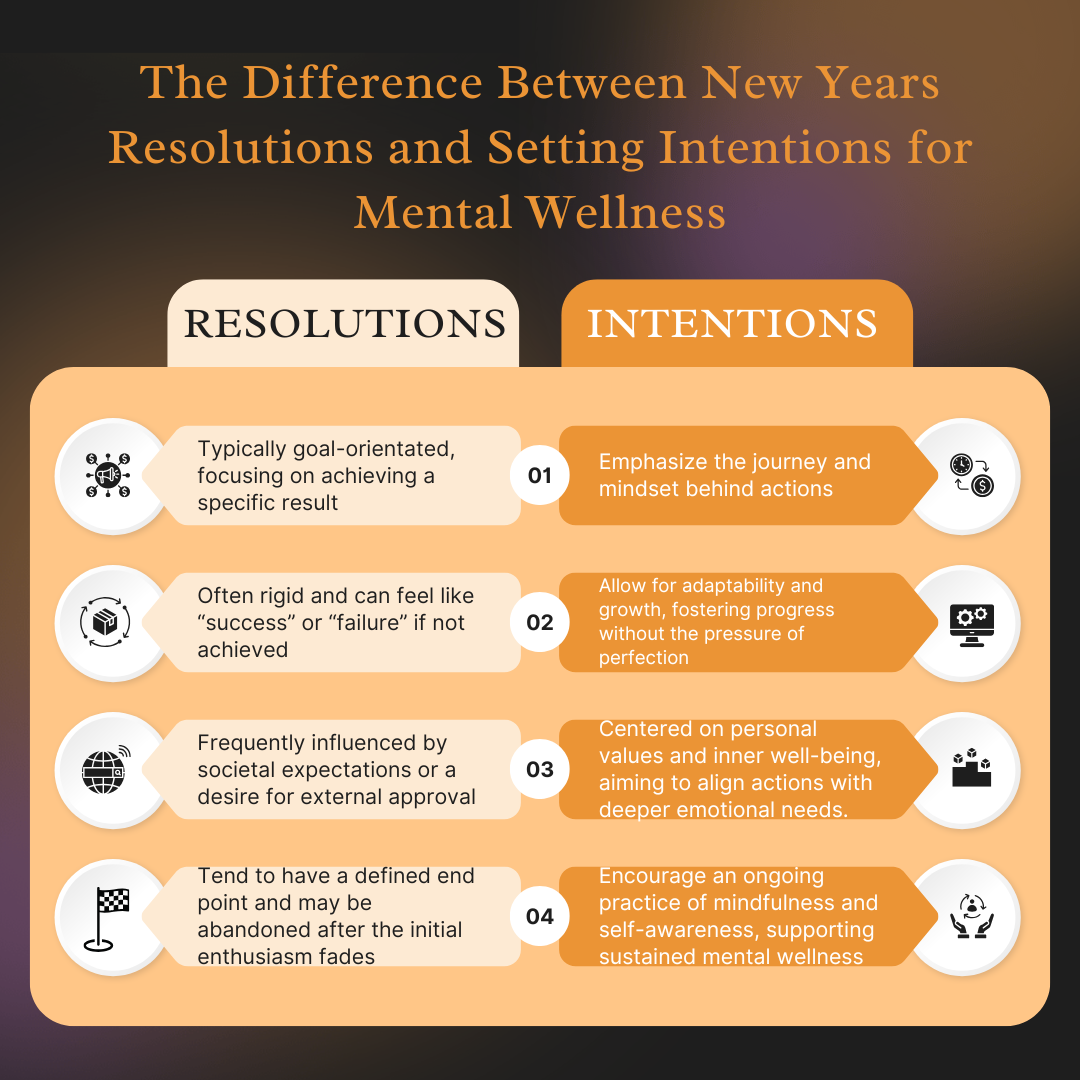
The Pitfalls of Resolutions
New Year’s resolutions often stem from a desire for self-improvement, but they tend to focus on outcomes rather than processes. Resolutions are typically rigid, binary goals: “Go to the gym five times a week,” “Stop eating sugar entirely,” or “Save $10,000 this year.” While these goals might be well-meaning, they can inadvertently set us up for failure. Here’s why:
Why Intentions Work Better
Intentions, on the other hand, shift the focus from rigid outcomes to the process of living in alignment with your values. Rather than being prescriptive, intentions are guiding principles that can evolve with your needs and circumstances. Psychologically, this approach is more effective for fostering long-term well-being. Here’s why intentions are powerful:
Setting Intentions for the Year Ahead
To start your year off right, consider adopting an intentions-based approach. Here’s how you can create meaningful, realistic intentions:
Examples of Intentions
Here are some examples of intentions you might consider:
The Psychological Benefits of Intentions
Adopting an intentions-based approach can significantly enhance mental well-being. Research shows that focusing on values and mindfulness reduces stress, increases resilience, and promotes a sense of control (Durston, 2022). Unlike resolutions, which often hinge on external achievements, intentions help you develop a positive relationship with yourself—a foundation for lasting change.
Starting the year off right doesn’t mean transforming yourself overnight. It’s about showing up authentically, embracing your values, and taking small steps toward the life you want to lead. At Grit Psychology, we encourage you to trade the pressure of perfection for the power of intention. Let this year be a journey of growth, balance, and self-compassion.
Here’s to a fulfilling and intentional New Year!
References
Durston, T. (2022). Resilience, mindset, and mindfulness. Emotional Well-Being for Animal Welfare Professionals, 139–140. https://doi.org/10.1079/9781789247817.0010
The holiday season is often described as "the most wonderful time of the year," but for many, it can also be a source of significant stress and anxiety (Gilbert & Abdullah, 2002). From the pressure to attend countless social events to the expectations of hosting perfect gatherings, it’s easy to feel overwhelmed. At Grit Psychology, we understand that navigating this busy season while prioritizing your mental wellness can be challenging, but with the right strategies, it’s possible to find balance.
Recognizing the Sources of Holiday Anxiety
Holidays come with a variety of stressors that can impact mental health. Here are some common challenges people face:
1. Pressure to Drink Holiday parties and gatherings often center around alcohol, making it difficult for those who choose not to drink or those in recovery. Declining a drink can sometimes lead to feelings of judgment or the need to explain yourself.
2. Pressure to Be Social For those with social anxiety or introverted tendencies, the endless stream of holiday events can feel daunting. The expectation to show up with enthusiasm can exacerbate feelings of stress and exhaustion.
3. Pressure to Be Happy While Grieving The holidays can intensify feelings of loss, whether it’s missing a loved one who has passed away or coping with changes like divorce or estrangement. The expectation to appear cheerful can create an inner conflict.
4. Pressure to Be the Perfect Host Hosting holiday events comes with its own set of stressors, from preparing meals to creating a festive atmosphere. The desire to meet everyone’s expectations can lead to burnout.
Strategies to Manage Holiday Anxiety
While the pressures of the season can feel heavy, there are ways to protect your mental health:
1. Set Boundaries Around Alcohol If you’re uncomfortable drinking, it’s okay to politely decline. You can also bring your own non-alcoholic beverages or practice responses like, “I’m taking a break from alcohol for now.” Remember, you don’t owe anyone an explanation for prioritizing your well-being.
2. Prioritize Quality Over Quantity in Social Events Instead of trying to attend every holiday event, choose the ones that matter most to you. Allow yourself to say no to invitations that feel like too much. For events you do attend, plan an “exit strategy” if you start to feel overwhelmed.
3. Acknowledge Your Grief If you’re grieving during the holidays, give yourself permission to feel your emotions rather than suppressing them. Create space for traditions that honor your loved one, such as lighting a candle or sharing a special memory. It’s also okay to let others know if you’re struggling and need support.
4. Simplify Hosting Responsibilities Hosting doesn’t have to mean doing everything yourself. Delegate tasks like cooking or decorating to friends or family members, and let go of the idea that everything has to be perfect. People will remember the time spent together more than the details.
Practicing Self-Care During the Holidays
In addition to addressing specific pressures, maintaining self-care is essential for managing holiday anxiety. Tilman (2024) offers some of the following suggestions:
1. Stick to a Routine While the holidays often disrupt regular schedules, try to maintain some consistency in your day. Prioritize regular sleep, balanced meals, and physical activity.
2. Schedule “Me Time” Amid the holiday hustle, carve out time to recharge. Whether it’s a quiet walk, journaling, or watching your favorite movie, these moments can help you stay grounded.
3. Practice Mindfulness Mindfulness techniques, such as deep breathing or meditation, can help reduce stress. When holiday tasks feel overwhelming, pause and focus on the present moment.
4. Reach Out for Support If holiday anxiety feels unmanageable, consider reaching out to a therapist or counselor. Professional support can provide coping strategies tailored to your needs.
Reframing Holiday Expectations
Remember, the holidays don’t have to be perfect to be meaningful. Let go of unrealistic expectations and focus on what truly matters to you (Battino, 2006). Whether that means connecting with loved ones, taking time to reflect, or simply resting, honoring your own needs is the best gift you can give yourself this season.
Supporting Loved Ones During the Holidays
While taking care of your mental health is vital, the holidays can also be an opportunity to support others who may be struggling. Check-in on friends or family members who seem overwhelmed, lonely, or distant. A simple message or a thoughtful gesture can make a big difference. Encouraging an open dialogue about feelings and offering nonjudgmental support can help create a sense of connection and understanding.
For those grieving or facing tough circumstances, consider small acts of kindness, like helping with errands, offering to share a meal, or simply being present. Sometimes, it’s not about solving problems but about showing empathy and solidarity.
Planning for a Healthier Holiday Season
Proactively planning for the holidays can alleviate some of the associated stress (Tilman, 2024). Create a budget to avoid financial strain and stick to it. If you’re hosting, make a checklist to help organize tasks and set realistic expectations. If you know certain events or situations trigger anxiety, prepare strategies in advance for how you’ll handle them.
Additionally, consider what traditions or commitments genuinely bring you joy and which ones feel obligatory. It’s okay to let go of activities that no longer serve you or your well-being. This can create space for new traditions that align more closely with your values and current needs.
Finding Joy in the Small Moments
Amid the hustle and bustle, it’s easy to lose sight of the simple joys of the season. Take time to appreciate the small things, whether it’s the glow of holiday lights, the taste of a favorite treat, or a heartfelt conversation. Gratitude can be a powerful tool for shifting focus from stress to moments of contentment.
A Season for Self-Compassion
Above all, remember to be kind to yourself. The holidays can be emotionally demanding, and it’s okay to feel a mix of emotions. Practice self-compassion by acknowledging your feelings without judgment and treating yourself with the same care you would offer a friend.
At Grit Psychology, we’re here to support you through the ups and downs of life, including the challenges of the holiday season. If you’re feeling overwhelmed, don’t hesitate to reach out for guidance and care. Together, we can make this season one of balance, connection, and mental wellness.
References
Battino, R. (2006). Expectation: The very brief therapy book. Crown House Publishing.
Gilbert, D., & Abdullah, J. (2002). A study of the impact of the expectation of a holiday on an individual’s sense of well-being. Journal of Vacation Marketing, 8(4), 352-361. https://doi.org/10.1177/135676670200800406
Tilman, S. (2024). 18 Self-Care Ideas to Ease Holiday Stress Learn to Balance holiday stress with self-care to slow down and enjoy the season with less bother. Stress. https://www.signos.com/blog/holiday-stress
I want to start with something that doesn't get said enough.
Needing help with your mental health is not a weakness. It is not a personality flaw. It is not something to quietly manage on your own until it either gets better or gets worse. It is a human experience, and like most human experiences that involve suffering, it deserves to be taken seriously.
Not eventually. Now.
Most people, if you asked them, would say of course everyone deserves access to mental health support. Of course people in crisis should be able to get help. Of course no one should have to white-knuckle their way through something that is genuinely treatable just because the system doesn't have room for them.
And yet.
Wait lists stretch for months. People drive hours to see someone because there's nobody closer. Others can't afford to go at all, so they don't. Some people finally gather the nerve to make the call and are told the next available appointment is in four months. Four months is a long time when you're really struggling.
This isn't about blame. It's just true. And it's worth saying out loud.
Here is something I think about a lot. There are people right now, maybe someone you know, who are genuinely suffering and have said nothing to anyone. Not because they don't want help. Because they're afraid of what happens if they ask for it.
Afraid of being seen differently. Afraid of what their employer might think, or their family, or the community they've spent years building trust in. Afraid that the label will follow them in ways that are hard to shake.
That fear doesn't come from nowhere. It comes from years of watching mental health struggles be treated as character flaws rather than health conditions. It comes from growing up in environments where you pushed through things and didn't talk about them. It comes from a culture that is getting better at this, genuinely, but still has a long way to go.
The courage it takes some people just to admit they're not okay is extraordinary. And they deserve to be met with something worthy of that courage.
Getting through the door is one thing. What happens next matters just as much.
People have a right to understand what's being recommended for them. To ask questions and get real answers. To be part of decisions about their own care rather than just being told what the plan is. To be treated like an intelligent adult who knows things about their own life that no clinician can fully see from the outside.
Good mental health care is collaborative. It takes the whole person seriously, not just the presenting symptoms. It recognizes that two people can have the same diagnosis and need completely different things. It asks questions and actually waits for the answers.
When that happens, something changes. Not dramatically, not overnight, but in ways that are real. People start to trust the process. They show up. They do the hard work. And they get better.
Mental health touches everything. The way we show up at work. The kind of parents, partners, and friends we are able to be. Whether we feel connected to the people around us or quietly adrift. Whether we can enjoy the ordinary good things in life or whether everything is filtered through a layer of pain we can't quite name.
When people don't get support, those effects don't stay contained. They spread into families, into workplaces, into communities. The cost of untreated mental health struggles is real and it lands everywhere.
And when people do get help, when they're treated with actual dignity and real care, the ripple goes the other way. It is worth investing in. It is worth building better systems for. It is worth fighting the stigma for.
Everyone deserves that. Not just the people who know how to navigate the system or who happen to live in the right postcode. Everyone. Full stop.
Mental health care is not a luxury. It never was.
As the days grow shorter and temperatures drop, many people experience shifts in mood and energy. For some, these seasonal changes bring more than just the "winter blues." Seasonal Affective Disorder (SAD) is a form of depression that occurs in a predictable pattern, usually during the fall and winter months, and can significantly impact an individual’s quality of life (Galima et al., 2020). In this blog, Grit Psychology explores the key aspects of SAD, its causes, risk factors, and effective treatment options.
What Is Seasonal Affective Disorder (SAD)?
SAD is a subtype of depression that typically emerges during the colder months when daylight hours are reduced (Galima et al., 2020). Unlike other forms of depression, SAD is directly linked to changes in seasons. The symptoms often remit during spring and summer, making it distinct from major depressive disorder (MDD), which may persist year-round. Some individuals also experience "summer SAD," a less common form that occurs during the warmer months.
Differences in Brain Chemistry
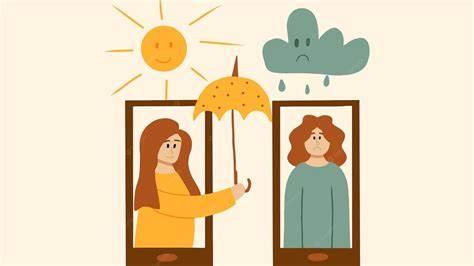
The biological underpinnings of SAD differ from other depressive disorders (Fonte & Coutinho, 2021). SAD is often associated with disruptions in circadian rhythms (the body’s internal clock) and dysregulation of neurotransmitters like serotonin and melatonin. While major depression typically involves more generalized serotonin dysregulation, SAD may be triggered by reduced light exposure, which can disrupt the production and balance of these critical brain chemicals.
SAD as a Spectrum Disturbance
SAD is often described as part of a “spectrum disturbance,” meaning it exists on a continuum of mood disorders rather than as a standalone condition (Fonte & Coutinho, 2021). This concept emphasizes that SAD symptoms can range from mild to severe and may overlap with other psychiatric conditions like generalized anxiety disorder, bipolar disorder, or dysthymia. Understanding SAD as a spectrum helps clinicians tailor treatment based on symptom severity and co-occurring conditions.
Risk Factors for SAD
Certain individuals are more susceptible to SAD than others. Roecklein & Wong (2021) share some primary risk factors:
Biological Theories: Circadian Rhythm and Serotonin Dysregulation
Two prominent theories behind the biological causes of SAD are:
Diagnostic Criteria for SAD
SAD is diagnosed using criteria from the Diagnostic and Statistical Manual of Mental Disorders (DSM-TR-5) (American Psychiatric Association, 2022). It is categorized as a specifier of either major depressive disorder or bipolar disorder, with a seasonal pattern. Key criteria include:
Differentiating SAD from general seasonal mood changes is crucial. While many people feel a slight dip in mood during winter, SAD involves clinically significant symptoms that interfere with daily functioning.
The Disruptive Impact of SAD
The most disruptive aspect of SAD is its impact on daily life. Individuals often experience a profound loss of energy and motivation, making it difficult to perform everyday tasks, maintain relationships, or succeed at work or school (Galima et al., 2020). Social withdrawal and increased isolation can exacerbate feelings of loneliness and hopelessness, creating a vicious cycle that further deepens the depression.
Treatment Options for SAD
Effective treatment for SAD often involves a combination of therapies:
Cognitive Behavioral Therapy (CBT)
CBT is a highly effective treatment for SAD (Chen et al., 2024). It focuses on identifying and changing negative thought patterns and behaviors that contribute to depressive symptoms. For SAD, CBT often incorporates behavioral activation strategies, encouraging patients to engage in activities that provide a sense of accomplishment and enjoyment, even when motivation is low.
Light Therapy
Light therapy, or phototherapy, is a frontline treatment for SAD (Pjrek et al., 2019). It involves exposure to a bright light box that mimics natural sunlight. Daily sessions of 20-30 minutes in the morning can help regulate circadian rhythms and boost serotonin production. Research supports its efficacy, particularly when combined with CBT (Galima et al., 2020).
Vitamin D Supplementation
Low levels of vitamin D have been linked to depressive symptoms. Supplementing with vitamin D, particularly during the winter months, may alleviate some symptoms of SAD (Petric, 2021). However, it is often most effective when combined with other treatments like light therapy or CBT.
Lifestyle Changes
Exercise, structured routines, and spending time outdoors can significantly reduce SAD symptoms (Yang et al., 2020). Physical activity boosts endorphins and serotonin, while consistent routines help stabilize circadian rhythms. For individuals hesitant to seek traditional treatments, lifestyle changes can be a crucial first step in managing SAD.
The Importance of Social Support
Opening up to friends and family about SAD can be a vital part of the healing process. Supportive conversations can lead to greater understanding, reduced isolation, and the encouragement needed to seek professional help. Social support networks can also help individuals stay accountable to treatment plans and lifestyle changes.
Long-Term Management and Final Advice
Long-term management of SAD often involves a combination of treatments tailored to the individual. If you’re unsure whether your winter blues are SAD or another mental health concern, it’s essential to consult a mental health professional. Early intervention can prevent symptoms from worsening and improve overall well-being.
At Grit Psychology, we understand the profound impact SAD can have on your life. If you or someone you know is struggling, reach out for support. There is hope, and with the right tools, you can reclaim the joy and energy of life—even during the darkest months of the year.
References
American Psychiatric Association. (2022). Diagnostic and Statistical Manual of Mental Disorders (5th ed., text rev.) American Psychiatric Publishing. https://doi.org/10.1176/appi.books.9780890425787
Chen, Z.-W., Zhang, X.-F., & Tu, Z.-M. (2024). Treatment measures for seasonal affective disorder: A network meta-analysis. Journal of Affective Disorders, 350, 531–536. https://doi.org/10.1016/j.jad.2024.01.028
Dang, T., Russel, W. A., Saad, T., Dhawka, L., Ay, A., & Ingram, K. K. (2023). Risk for seasonal affective disorder (SAD) linked to circadian clock gene variants. Biology, 12(12), 1532. https://doi.org/10.3390/biology12121532
Fellinger, M., Waldhör, T., Serretti, A., Hinterbuchinger, B., Pruckner, N., König, D., Gmeiner, A., Vyssoki, S., Vyssoki, B., & Fugger, G. (2022). Seasonality in major depressive disorder: Effect of sex and age. Journal of Affective Disorders, 296, 111–116. https://doi.org/10.1016/j.jad.2021.09.051
Fonte, A., & Coutinho, B. (2021). Seasonal sensitivity and psychiatric morbidity: Study about seasonal affective disorder. BMC Psychiatry, 21(1). https://doi.org/10.1186/s12888-021-03313-z
Galima, S. V., Vogel, S. R., & Kowalski, A. W. (2020). Seasonal Affective Disorder : Common questions and answers. American Family Physician, 102(11), 668-672.
Petric, D. (2021). The importance of vitamin D in seasonal affective disorder and other depressive disorders. International Journal of Medical Reviews and Case Reports, 5(13), 1-48. https://d1wqtxts1xzle7.cloudfront.net/77954527/Final_article_Petric_SAD-libre.pdf?1641229166=&response-content-disposition=inline%3B+filename%3DCLINICAL_MEDICINE_SCIENCES_MINI_REVIEW_T.pdf&Expires=1733440892&Signature=X61KCELHD35r-wpY9Zd0J0BQP~QFYdXVc8NkeNbqhSrTK713jfp2Fcm2R-dXAY~CBvia9k7haCbGED8P4Cz~9cZTMpM5TXut1Gq8EYZ8pCYq9g4HUxUbphsBnXQhnzIhdlzO6l~Q6fgsuutiHv0mgT5XckcFLNYagyMXqhXuEBBkt3hOeW2TH~gmx4pGDBU5KtGRsDupySVAwSvhwvP6LN7wuy6UzhMtiT264dMX5-Gvhs55RedL4K1JrUcRynwfoLPO0i7Y48NRR6lAZAuZb7Mebhlxzn9qvYlKRKTyrXr47itYtKqSar6zWS7tlDn5Lb0TmP3gZgFuv9lJVLv5yQ__&Key-Pair-Id=APKAJLOHF5GGSLRBV4ZA
Pjrek, E., Friedrich, M.-E., Cambioli, L., Dold, M., Jäger, F., Komorowski, A., Lanzenberger, R., Kasper, S., & Winkler, D. (2019). The efficacy of light therapy in the treatment of seasonal affective disorder: A meta-analysis of randomized controlled trials. Psychotherapy and Psychosomatics, 89(1), 17–24. https://doi.org/10.1159/000502891
Roecklein, K. A., & Wong, P. M. (2020). Seasonal affective disorder. Encyclopedia of Behavioral Medicine, 1964-1966. https://doi.org/10.1007/978-3-030-39903-0_836
Yang, Y., Zhang, S., Zhang, X., Xu, Y., Cheng, J., & Yang, X. (2020). The role of diet, eating behavior, and nutrition intervention in Seasonal affective disorder: A systematic review. Frontiers in Psychology, 11. https://doi.org/10.3389/fpsyg.2020.01451

