
As the clock strikes midnight on December 31st, many of us are brimming with hope and motivation to make the upcoming year better than the last. It’s a tradition for millions to declare ambitious New Year’s resolutions: lose weight, save more money, travel the world, or finally tackle that long-postponed project. Yet, by February, many resolutions fizzle out, leaving feelings of guilt and failure in their wake. What’s going wrong? And how can we approach the New Year in a way that fosters growth, balance, and self-compassion?
At Grit Psychology, we believe the difference lies in understanding the distinction between resolutions and intentions—and choosing the latter to set yourself up for success.
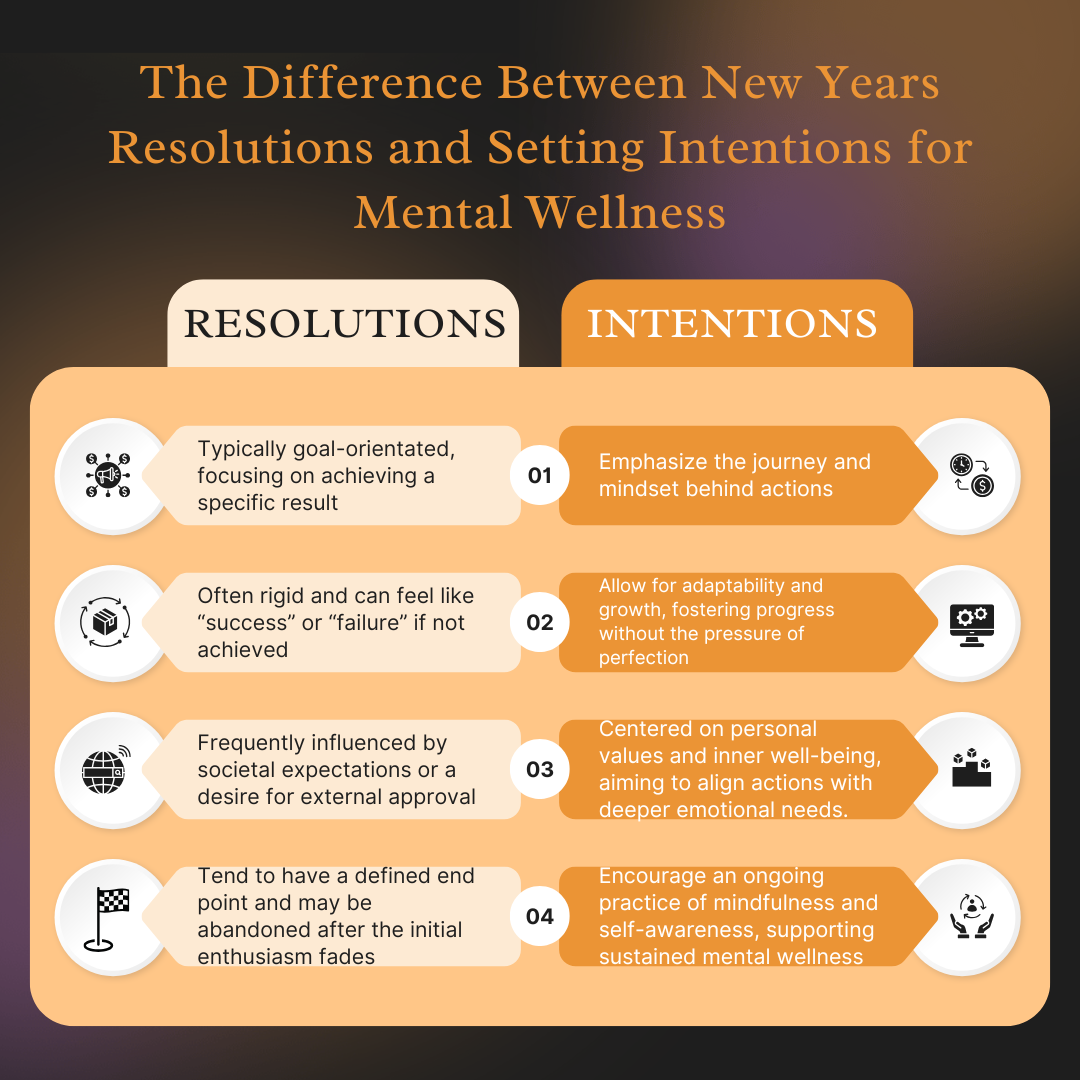
The Pitfalls of Resolutions
New Year’s resolutions often stem from a desire for self-improvement, but they tend to focus on outcomes rather than processes. Resolutions are typically rigid, binary goals: “Go to the gym five times a week,” “Stop eating sugar entirely,” or “Save $10,000 this year.” While these goals might be well-meaning, they can inadvertently set us up for failure. Here’s why:
- Unrealistic Expectations: Resolutions often aim for dramatic change overnight, neglecting the reality that habits take time and setbacks are normal.
- External Pressure: Resolutions are frequently influenced by societal standards or comparison to others rather than personal values or desires.
- Black-and-White Thinking: Missing one workout or indulging in dessert can feel like “failing,” leading to frustration and giving up entirely.
- Lack of Flexibility: Resolutions don’t adapt to life’s inevitable twists and turns, making them brittle and unsustainable.
Why Intentions Work Better
Intentions, on the other hand, shift the focus from rigid outcomes to the process of living in alignment with your values. Rather than being prescriptive, intentions are guiding principles that can evolve with your needs and circumstances. Psychologically, this approach is more effective for fostering long-term well-being. Here’s why intentions are powerful:
- Values-Based: Intentions reflect what truly matters to you, such as “prioritizing health” or “connecting with loved ones.” This makes them intrinsically motivating.
- Compassionate: Unlike resolutions, which often criticize what’s “wrong” with you, intentions embrace where you are and encourage growth.
- Flexible: Intentions adapt to your circumstances. For example, if you intend to “nourish your body,” this could mean a healthy meal one day and rest another.
- Focus on the Journey: Intentions emphasize daily mindfulness and effort over reaching a specific milestone, reducing stress and enhancing satisfaction.
Setting Intentions for the Year Ahead
To start your year off right, consider adopting an intentions-based approach. Here’s how you can create meaningful, realistic intentions:
- Reflect on Your Values Take some time to think about what truly matters to you. Is it health, creativity, relationships, balance, or something else? Consider how you want to feel and what aligns with your core beliefs.
- Focus on the Present Instead of focusing on fixing the past or chasing an ideal future, ground your intentions in how you want to show up each day. For example, instead of “losing every deal at work,” your intention could be “bringing curiosity and effort to my projects.”
- Keep It Simple and Positive Use clear, encouraging language. Avoid negative phrasing like “stop procrastinating” and instead focus on what you want to cultivate, such as “approaching tasks with focus and energy.”
- Embrace Small, Consistent Steps Intentions don’t require grand gestures. Small, consistent efforts build momentum and foster sustainable change. For instance, if your intention is to “prioritize self-care,” this might look like a five-minute mindfulness practice or an early bedtime.
- Revisit and Adjust Life is dynamic, and your intentions should be, too. Check in with yourself regularly and adapt as needed. If an intention no longer resonates, don’t be afraid to revise it.
Examples of Intentions
Here are some examples of intentions you might consider:
- “I intend to treat myself with kindness and patience.”
- “I intend to cultivate gratitude and notice the small joys in my day.”
- “I intend to approach challenges with curiosity rather than fear.”
- “I intend to strengthen my relationships by listening deeply.”
- “I intend to create space for rest and reflection.”
The Psychological Benefits of Intentions
Adopting an intentions-based approach can significantly enhance mental well-being. Research shows that focusing on values and mindfulness reduces stress, increases resilience, and promotes a sense of control (Durston, 2022). Unlike resolutions, which often hinge on external achievements, intentions help you develop a positive relationship with yourself—a foundation for lasting change.
Starting the year off right doesn’t mean transforming yourself overnight. It’s about showing up authentically, embracing your values, and taking small steps toward the life you want to lead. At Grit Psychology, we encourage you to trade the pressure of perfection for the power of intention. Let this year be a journey of growth, balance, and self-compassion.
Here’s to a fulfilling and intentional New Year!
References
Durston, T. (2022). Resilience, mindset, and mindfulness. Emotional Well-Being for Animal Welfare Professionals, 139–140. https://doi.org/10.1079/9781789247817.0010

